

Bookmark and Share

Latest News

West Virginia's slow recovery from the recession includes different employment make-up

Jobs CountMay 18, 2012 -- As 2012 progresses, West Virginia struggles to recover from the Great Recession, finding it difficult to hold on to gains in employment. Interestingly, the make-up of the state's employment has changed over the past few years, with losses in construction and manufacturing to gains in health care, education and mining.

Visit Jobs Count


Budget Brief: FY 2013 budget update

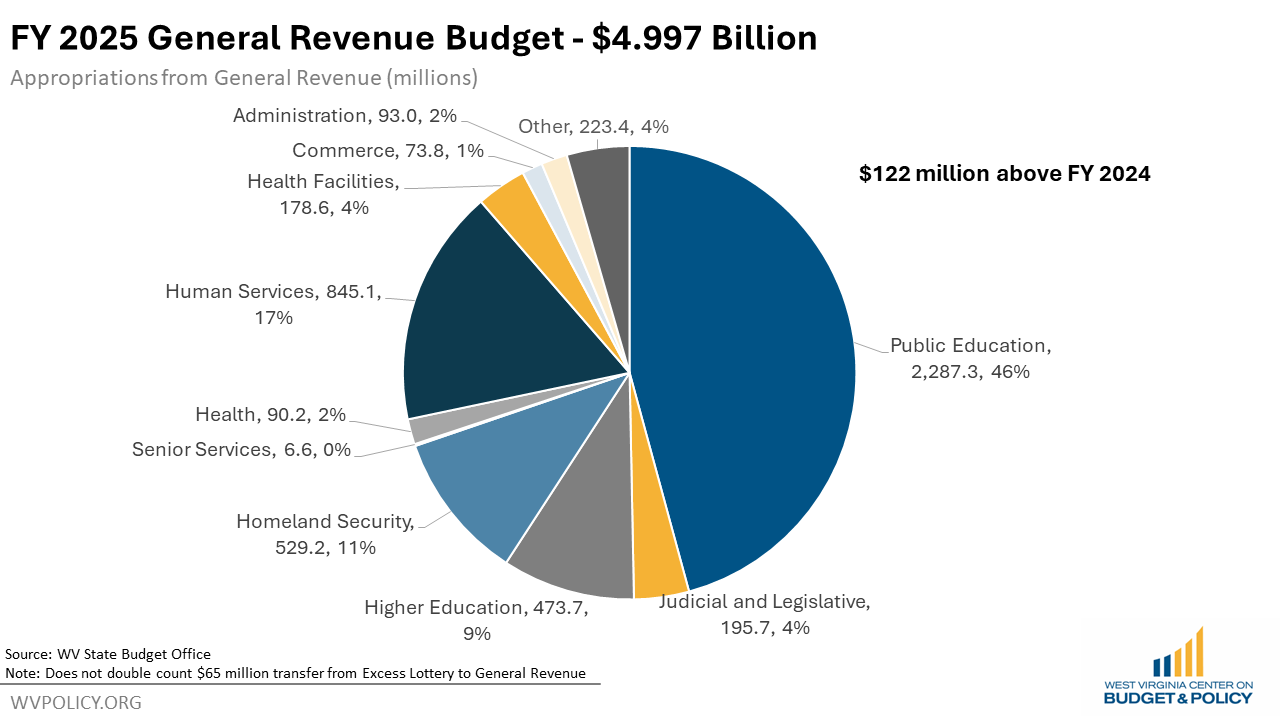
FY 2013 Budget UpdateApril 3, 2012 -- The FY 2013 budget passed by the state legislature contained few changes to what the governor proposed, differing by just $4.6 million, a decrease of 0.04 percent. The final budget represents a total increase of approximately 1.6 percent or $200 million over the FY 2012 budget. Read a complete analysis, including areas that received a governor veto and bills having a fiscal impact, here:

FY 2013 Budget Update


Policy Memo: Major tax responsibilities of coal and natural gas producers in Wyoming and West Virginia

March 2, 2012 -- This policy memo is a comparison of how West Virginia and Wyoming tax their mineral resources.  While there are similarities, there are also many differences. This paper continues the discussion of how states which are reliant on extractive industries can make policy decisions, like the creation of a permanent mineral trust fund, and how those decisions can impact state budgets for years to come. Read


Stemming the Tide Report CoverNEW REPORT: Stemming the tide: The racial and economic impacts of West Virginia's prison system

February 22, 2012 -- Despite little growth in either its population or crime rate, West Virginia has seen a marked increase in the number of people housed in its corrections facilities. As the state's prisons become overcrowded, West Virginia is facing a corrections crisis that not only impacts the state's budget but also the low-income and minority communities that are disproportionately impacted by drug addiction and substance abuse issues that land them in prison instead of treatment programs.  Read the report.


Issue Brief: Cracking the cracker bill

February 2, 2012 -- A bill signed into law last week by Governor Tomblin will give a major tax incentive to companies that want to locate a cracker plant in West Virginia. According to the bill's fiscal note, this tax incentive would have no fiscal impact on the state. In reality, not only will the state lose millions in tax revenue, it will have to shoulder the costs of increased demand on public services that such a facility will require once it locates here. Read


Permanent mineral trust fund would set aside money for when resources are gone

Economic Diversification Trust Fund ReportJanuary 30, 2012 -- As one of the least economically diverse states in the nation, West Virginia relies heavily on its natural resources for revenue. Funds from these resources fluctuate and, one day, will be gone. As the Marcellus “Gold Rush” comes to West Virginia, it is time for policymakers to consider establishing a permanent mineral trust fund in West Virginia, similar to what six other states have done. “Creating an Economic Diversification Fund: Turning Nonrenewable Natural Resources into Sustainable Wealth for West Virginia” highlights the benefits that such funds have brought to other states and how one could benefit West Virginia. Read the report.


Analysis of governor’s FY 2013 budget available

January 20, 2012 -- Governor Tomblin’s FY 2013 budget will give West Virginia a small surplus but the state could head for red ink in the near future as expenditures for the state’s correction system as well as Medicaid grow, and revenue from the business franchise tax is reduced to 0%. Read the report.


West Virginia ranks 29th among the states--
Report: States lack sound, consistent policies to enforce job-creation and other performance requirements in economic development subsidy programs

January 17, 2012 -- "Money-Back Guarantees for Taxpayers: Clawbacks and Other Enforcement Safeguards in State Economic Development Subsidy Programs," published by Good Jobs First, a nonprofit, nonpartisan research center based in Washington, DC looks at the performance standards built into subsidy programs. "Money-Back Guarantees" rates states on how well they enforce those standards. Read it at: www.goodjobsfirst.org.


Severance tax important to West Virginia's future, does not deter production

December 13, 2011 -- As West Virginia policymakers consider legislation to regulate the state’s next big energy boom, a new WVCBP report (Investing in the Future: Making the Severance Tax Stonger for West Virginia) finds that strengthening the severance tax would help the state take advantage of its natural resource wealth and would not put the state at a competitive disadvantage. Read the report.


West Virginia Medicaid made simple

Medicaid Made SimpleTwenty-two percent of all West Virginians rely on Medicaid for health care. Cutting Medicaid benefits would hurt many of the state's poor, elderly and disabled. Medicaid Made Simple explains why Medicaid is so important to West Virginia, its people, its economy and its future.

Read the Report


Save up, not spend down: Eliminating the asset test for families in Medicaid and TANF

Save Up, Not Spend DownIt's time to eliminate the asset test for Medicaid and TANF. Right now low-income West Virginians are required to spend down their assets like retirement accounts before they can qualify for financial assistance like Medicaid. Families are depleting resources that could help in the long-term so they can qualify for short-term assistance. Many other states don't do this, and West Virginia could save administrative costs and help its low-income families by following their lead. Read report


Extending the payroll tax cut

President Obama's Jobs Act includes extending the temporary payroll tax cut passed last December. The payroll tax cut has been an effective stimulus in West Virginia benefiting approximately 900,000 people and providing $500 million in tax relief. The president's new proposal would provide a $1,500 tax cut to the average family, help prevent a renewed recession and provide more additional economic stimulus than other measures like a cut in the corporate tax rate. Read